
.webp)
 By
Anuja Mohile (Aahaartadnya)
By
Anuja Mohile (Aahaartadnya) Making Space on the Plate During Menopause
Menopause is a phase all women pass through, but let’s be honest—our bodies start responding a little differently during this time. Many of us begin to notice changes we didn’t expect: weight creeping up, bones feeling weaker, energy dipping, blood sugar or cholesterol numbers changing. And it can feel confusing, even frustrating. That’s where what we eat every day really starts to matter.
One simple idea that can make a big difference is diet diversity. Basically, eating a variety of foods instead of repeating the same few items daily. Not because we’ve done anything wrong, but because our body’s needs change.
Think about it this way: no single food can give us everything our body needs. When we eat a mix of foods, we naturally get more calcium, vitamin D, iron, magnesium, B-vitamins, and antioxidants, such nutrients that become especially important after menopause. As estrogen levels fall, bones can weaken faster, and metabolism may slow down. A varied diet gently supports the body through these changes, without making food feel like a punishment or a “diet”.
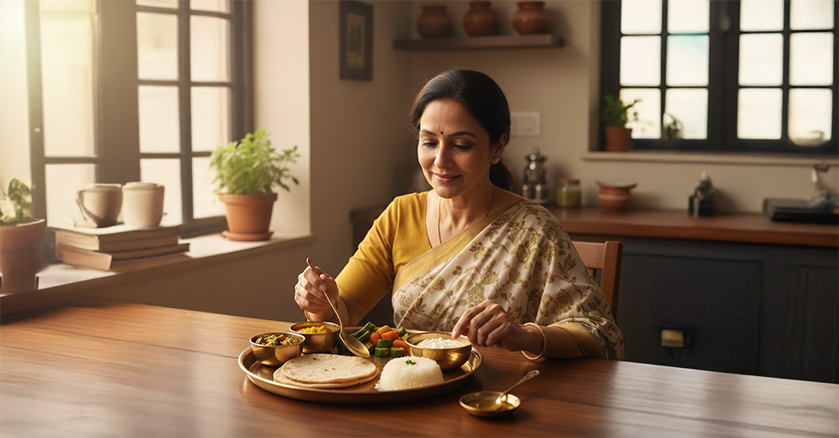
For us in India, this doesn’t mean fancy superfoods or expensive supplements. In fact, our traditional meals already show us the way. A simple home-style thali—with a grain, a dal, a vegetable, some curd, and a little fat—is a perfect example of balance and diversity. Rotating between rice, jowar, bajra, or ragi; using different dals like toor, moong, chana, or rajma; and choosing seasonal sabzi such as bhindi, lauki, tori, cabbage, or leafy greens quietly strengthens nutrition without much effort.
But there is one reality we rarely talk about.
Many women
tell me, “I eat whatever is left,” or “I just make what everyone else
likes,” or “I
don’t really have preferences—I just want to finish the kitchen work.” This
habit of
adjusting, eating last, or skipping variety is not lack of awareness—it’s a lifetime
of putting everyone else first. Over years, this can quietly limit diet diversity,
especially for women in midlife who actually need better nutrition, not less.
Even the small things we often overlook matter. A spoon of til or flaxseed chutney, a handful of peanuts or roasted chana, a bowl of curd or buttermilk—these everyday foods support bone health, digestion, and overall vitality. Fermented foods we already enjoy—like idli, dosa, kanji, or homemade curd—nurture gut health, which plays an important role in metabolism and immunity during midlife.
Many women struggle with constant tiredness, weight gain around the waist, or being told to “cut down” on food. But menopause is not the time to eat less blindly. More often, it’s the time to eat more thoughtfully and eat for yourself too. When meals are diverse and nutrient-rich, the body feels nourished, satisfied, and supported.
Menopause doesn’t require complicated food rules or drastic changes. It’s really about bringing more colour, variety, and balance to the plate—and allowing yourself a place on that plate. Choosing one extra vegetable for yourself, serving yourself before the leftovers, or adding a small nutrient-rich side just for you are not indulgences; they are acts of care.
These small, practical choices may seem simple, but over time, they can help you feel stronger, steadier, and more comfortable in your body during this new phase of life.
Author - Anuja Mohile (Aahaartadnya)